Unlock exclusive discounts on trading tools!
The Road to 10,000 Hours
What does 10K of learning to trade look like
3/29/20263 min read
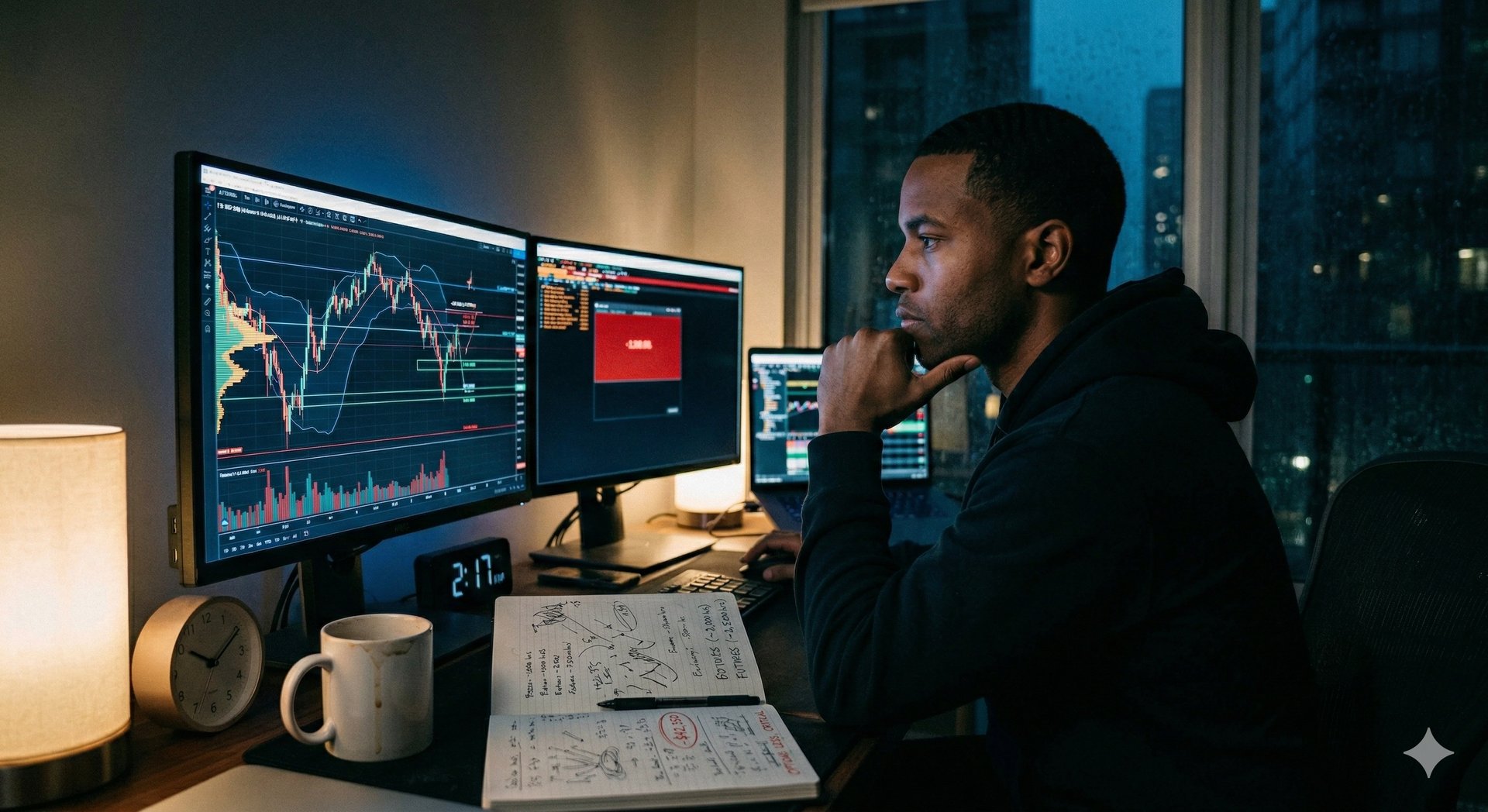
Most people think trading is something you can figure out in a year.
It’s not.
Since June 2021, I’ve put in roughly 9,000–11,000 hours into this.
That’s about four and a half years of being fully immersed—long nights reviewing charts, early mornings mapping levels, weekends spent studying instead of unplugging. There were stretches where this wasn’t even close to a hobby. It was 12–18 hour days, back-to-back, trying to figure out something that doesn’t come easy.
And the truth is, not all of those hours were equal.
Where the Hours Actually Went
My time in the market came in phases, and each one taught me something different.
Equities (~2,000 hours)
This was the foundation. Learning how markets move, understanding basic chart patterns, getting familiar with price behavior. It was necessary—but looking back, it was surface level. I was learning the language, not really speaking it yet.
Options (~2,000–2,500 hours)
This is where things got more complex—and more real.
I was deep into platforms like Tastytrade, Webull, ThinkorSwim. Running iron condors, iron butterflies, trying to understand Greeks, probabilities, and structured trades.
And this is also where I took some of my biggest hits.
I lost tens of thousands of dollars in this phase.
At the time, it felt devastating. Not just financially, but mentally. It forces you to look in the mirror a bit differently when real money is on the line and it’s not working.
But that period mattered more than I realized at the time.
Futures (~4,500–5,000+ hours)
This is where everything changed.
When I moved into futures, I stopped trying to learn everything—and started focusing on what actually mattered. Chart patterns began to make sense. Candlesticks weren’t just shapes anymore—they told a story. I started paying attention to what was happening inside the candle, not just where price was going.
This is also where my study shifted.
Less broad. More focused.
Same setups. Repeated over and over. Refining execution instead of chasing new ideas.
The Shift
Early on, I thought more hours would solve the problem. More studying, more strategies, more platforms. But more didn’t equal better. What actually made the difference was narrowing down. Fewer distractions. More intentional reps. Focusing on a small set of ideas and getting better at executing them.
That’s when things started to click—not because I was working more, but because I was finally working correctly.
What Those Hours Really Look Like
There are really two parts to this.
The first is the visible work.
Pre-market prep. Marking levels. Building scenarios. Sitting through full sessions. Executing, managing trades, staying engaged for hours at a time.
Then there’s the part people don’t see.
Reviewing trades after the fact. Journaling. Replaying key moments. Studying what actually happened versus what you thought happened. Going back to charts at night. Thinking about the market even when you’re off.
Put together, it’s 10–12+ hour days, consistently.
The Part Most People Don’t Understand
You can spend thousands of hours doing all of that—and still not improve. Because time isn’t the differentiator.
There are really two paths:
You’re either stacking hours while repeating the same mistakes…
or you’re using those hours to refine behavior and execution.
That was the shift for me.
Less chasing. Less trying to learn everything.
More focus on doing the same things, the right way, over and over.
That’s when the hours started to actually compound.
Final Thought
10K hours doesnt guarantee anything- There are people with 10,000 hours who are still inconsistent…
and people with fewer hours who are highly effective.
The difference isn’t time.
It’s how intentional you are with it. I’m somewhere around that range now—still refining, still improving.
Want to see how I spot setups like this? Check out the template and follow along daily for my trade plans.
Chart setup: RAIN Break + Retest Template